
- Home
- What We Do
- Equine Advice
- Arthritis in Equines
Arthritis in Equines
Arthritis is described as inflammation of a joint. The most common type in horses is Osteoarthritis or degenerative joint disease. Arthritis is found mainly in older equines, but it can affect any equine at any age for various reasons. It is non-reversible but with changes in management the equine can be kept more comfortable. Other types of arthritis include septic, traumatic, rheumatoid and Osteochondritis Dissecans.
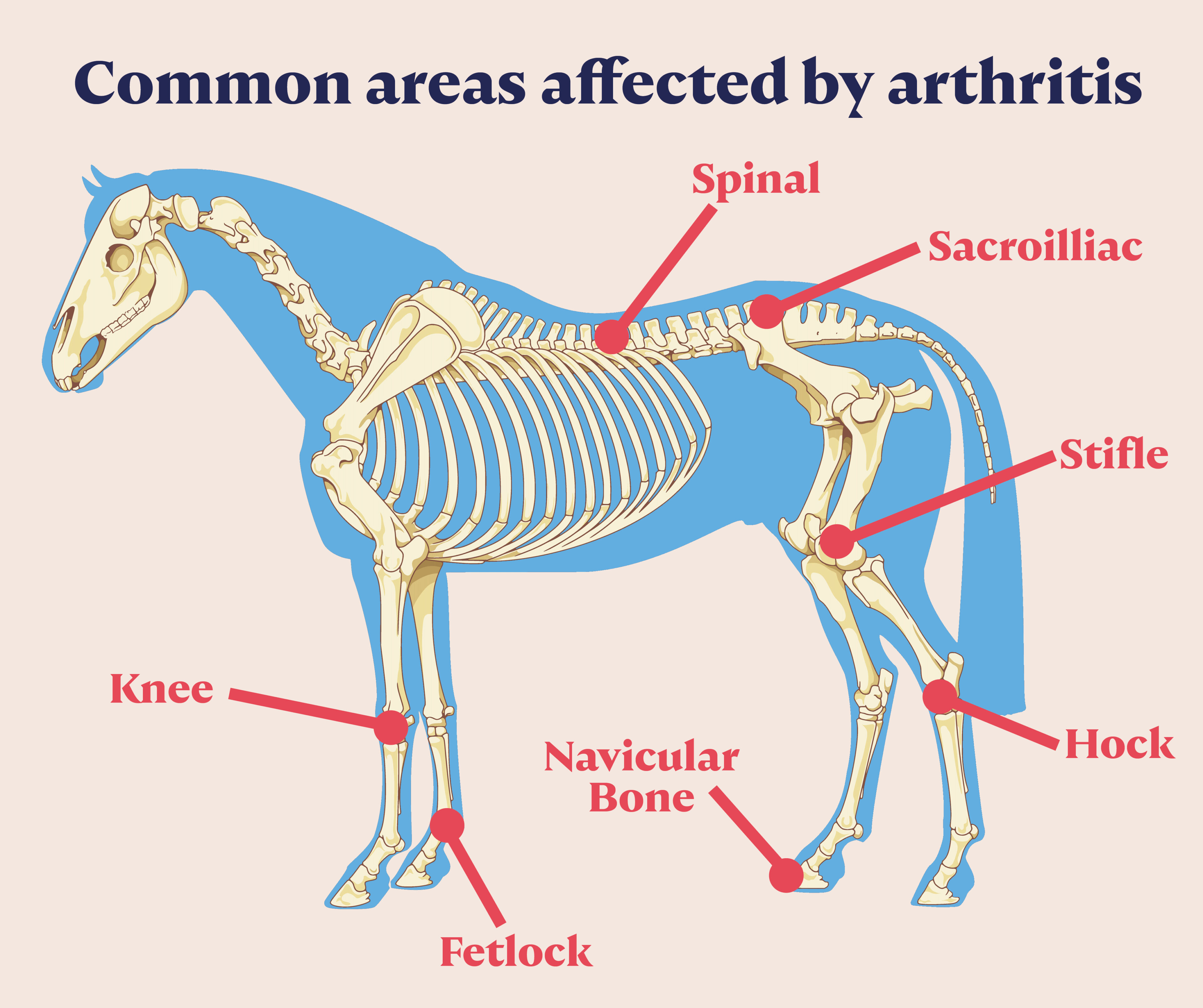
Signs of arthritis
- Pain and swelling around the joints.
- Restricted movement.
- Lameness.
- A change in the joint appearance, due to bone spurs.
- If infection is present, swelling and heat.
- Loss of movement, flexibility, grazing or eating from the floor may become difficult when reaching down. (loss of condition may occur)
- Longer time required when warming up for exercise.
The earlier that it can be diagnosed, the more support you can offer to keep your horse comfortable. We would advise you to contact your vet if you have any concerns. They will assess your horse’s movement in straight lines and on circles and carry out flexion tests in a lameness examination.
Nerve blocks, X- ray and ultrasound exams can be used to identify affected joints on site. CT, MRI and scintigraphy can also be used by equine referral hospitals.
Causes of arthritis
- Progressive wear and tear of the joints through years of work.
- Poor conformation, for example straight hocks.
- Infection in a joint from a puncture wound or septicaemia.
- Trauma from an injury.
- Rarely, autoimmune disease.
Joints
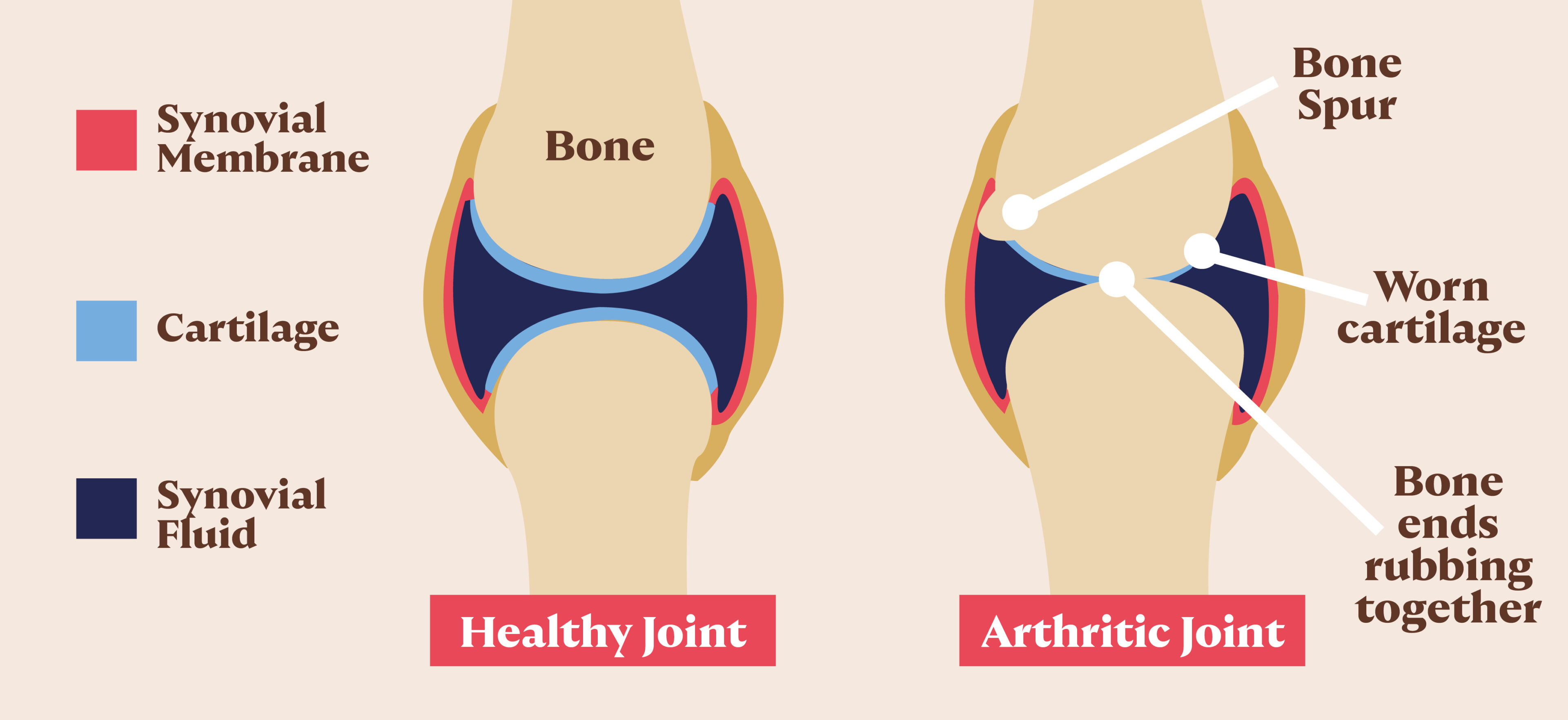
In a joint, the ends of the bones are covered with cartilage, which is a smooth protective tissue that helps reduce friction as joints move. In arthritic joints the cartilage can wear away or become damaged, resulting in inflammation and pain.
In some cases, the bone can be damaged, and spurs of bone can develop to start the process of immobilising that joint to prevent further pain. These can be seen on x-ray as well as deterioration or thickening of bone in an affected joint.
Treatments
The treatment plans are to slow the progression and maintain comfort and function. Depending on the severity of the arthritis, adjustments may need to be made to the amount or type of work the horse does.
You can support in many ways, by:
- Contacting your vet and following their advice
- Monitoring and maintaining a healthy body condition score
- Exercising appropriately, following the vet’s advice, to reduce stiffness and maintain function.
- Consider your current management plan, allow plenty of turn out to prevent stiffness and avoid long periods of time stabled. Consider the turnout area, a flat, level paddock would be beneficial.
- If box rest is initially advised by the vet, remember adding enrichment can provide mental and physical stimulation and provide forage and choice through a potentially difficult time for your horse.
- The use of a crew yard or larger stabling can provide a good environment for both movement and rest.
- Monitoring any changes, this could be if the horse is improving or sadly deteriorating. This may lead to quality-of-life discussions if you are unable to manage the changes required.
Following the visit by the vet, they may:
- Prescribe non-steroidal-anti-inflammatory and pain relief drugs.
- Recommend joint supplements.
- Medicate into the affected joints.
- Prescribe steroids as an anti-inflammatory or apply them into the affected joint but preventative aftercare must be arranged if the equine is a laminitis risk.
- Recommend antibiotics if an infection is present.
- Perform surgery in some severe arthritic cases, when the above options have been unsuccessful. This procedure removes the damage to the joints and in some cases fuses the two bones together to stabilise the joint and remove the source of pain.
If you have any questions or you would like some more information, please contact the welfare team for non-judgemental advice. Call Bransby Horses on 01427 787369 or email us welfare@bransbyhorses.co.uk our team work Monday – Friday 8.30am – 4.30pm.